Wednesday, May 9, 2012

Garden Study

Since returning from Spring Break, we have spent a lot of time working in our discovery garden. We used garden tools to spread mulch and to prepare our flower boxes for planting. We learned that spring is the best time to begin planting seeds. To become experts about gardening, we turned to several non-fiction resources such as books, websites, and online video streaming. 

We first learned about the needs of plants: air, water, space, and soil. We discovered that most of those are also important for us to live. We learned how seeds turn into plants, as well as explored different types of seeds. We planted sunflower, zinnia, cilantro, and spearmint seeds in our classrooms. We cared for the seeds by watering them and documented their growth. 


We spent a lot of time outside exploring the beautiful spring blooms outside of our school.


We learned about the parts of a plant and each of their functions.

We collected nature items from outside and brought the outside indoors by creating beautiful nature collages to hang in our classroom.


To share our learning, we painted different types of flowers to display outside of our classroom.


We learned that not only can you plant a flower garden, but you can plant vegetable gardens too! We read several books about planting vegetable gardens and learned about what vegetables we can plant in our garden at school.

We decided to plant cucumbers along with cilantro and sunflowers in our class flower box. Other classes have planted lettuce, potatoes, onions, carrots, broccoli, and peppers.

We have learned the appropriate way to care for seedlings and have done a wonderful job taking responsibility for weeding and watering our flower box.


While caring for our garden, we noticed several tiny critters in our garden. This led to an investigation about insects and other bugs. We learned that all insects have three body parts (head, thorax, abdomen) and six legs. Worms, slugs, spiders, and centipedes are not considered insects because they do not fit the description of an insect! We spent time sketching the insects we observed in our Exploration Journals.

Outside of our classroom, we created a vegetable garden to show others what types of vegetables can grow in a vegetable garden, as well as, the importance of planting vegetable seeds in rows. 

We also created a flower garden that included the parts of a flower. We showed the insects you can find in a flower garden like ants, caterpillars, and butterflies. Our learning about plants, gardens, and insects are included on the display.


Tuesday, May 1, 2012

Fancy Day

Today was Fancy Day at school.


We had so much fun spending the day at school in our fanciest clothes!


Saturday, March 10, 2012

Space Museum

For three months, we carefully studied the Solar System. We learned about the Earth, sun, moon, stars, space shuttles, and other planets. At the end of our study, we decided to have an open house to invite our families to our Space Museum and share what we have worked on and learned for the past three months! 

Each of the 8 planets, sun, moon, and stars were on display. 

Our space shuttle plans and creations were on display.

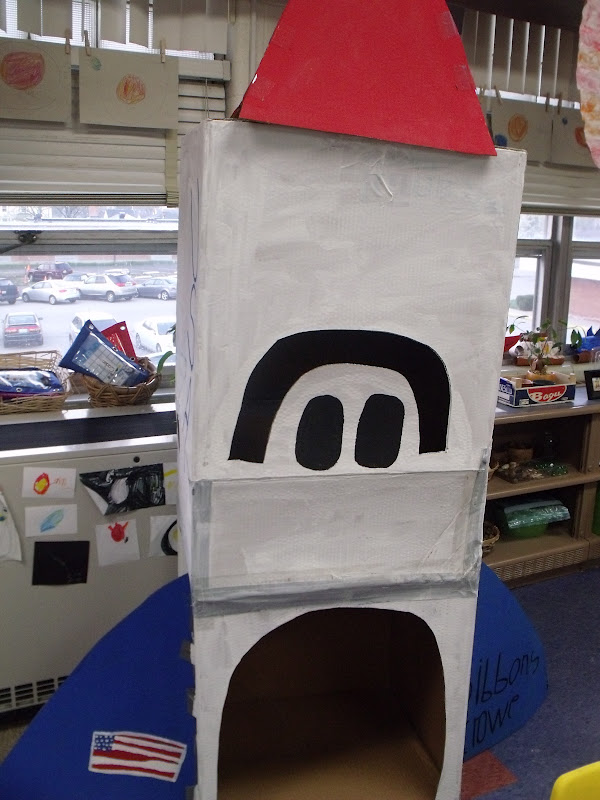
As well as, The Gibbons Crowe.

At each of our offices were My Place in Space books, the space non-fiction book, model of the Earth, and our clay planets that were made in art class.

We placed the many non-fiction books that we used to learn about the Solar System on display for our families.


We had a wonderful turn out! The boys and girls loved sharing their hard work with their families.

And of course, the Solar System documentation outside of our classroom was on full display to share our learning! Our Space Museum was a wonderful way to end our amazing study of the Solar System.


Friday, March 2, 2012

NASA Engineers and Astronauts

We were so intrigued by Neil Armstrong and the other astronauts who visited the moon, that we wanted to learn more about traveling into space. We learned that NASA is the National Aeronautics and Space Administration. The men and women who work for NASA plan and prepare to send astronauts into space, as well as share information gained through satellites about space. 

We pretended that we were the men and women who worked for NASA. We watched several videos about what it was like to be an astronaut and fly into space. We viewed many parts of NASA's website to watch footage taken from satellites, such as the Hubble Space Telescope. 

Our favorite part about working for NASA was looking at the many different space shuttles. We decided to create plans and construct our very own space shuttles. 

Using plastic bottles, cardboard tubes, and LOTS of masking tape we each constructed our own space shuttle. 


We learned that working for NASA is very hard work! It takes a lot of time, patience, and attention to detail.

We spent time making sure that our constructed shuttles matched our original plans and were sturdy enough to fly into space!


We used card stock to create the wings of the space shuttle.

Next, we decided to paint our shuttles to complete the process. We decided to use red, white, and blue as colors for the shuttles. We used brown to paint the external fuel tanks.

Once our space shuttles were dry, we used our plans to add details to our shuttles such as windows, lights, and labels.


The finished space shuttles looked absolutely amazing! 

Not only did we create small versions of a space shuttle, but the men and women of NASA decided we needed a large space shuttle for our classroom. We voted upon the colors and details of the space shuttle, as well as the name. The Gibbons Crowe was created carefully by all of the NASA workers of our class!


Wednesday, February 29, 2012

Non-Fiction Writers

Our Solar System study was even integrated into our Writer's Workshop. Since we were reading so many non-fiction books to learn about the different parts of the Solar System, we wanted to use the knowledge we gained to create non-fiction books of our own. 

We closely examined many non-fiction books and learned about the features of non-fiction text: 
  • Headings 
  • Labels 
  • Facts
  • Photographs
  • Diagrams
  • Captions 
  • Bold Words 
  • Table of Contents
  • Glossary

For about three weeks, we spent our Writer's Workshop time being the authors and illustrators of Solar System non-fiction books. Each day, we practiced integrating a feature of non-fiction text that we had learned about into our own books. 

Once our non-fiction books were completed, we edited the books and added covers. We then had a wonderful time sharing our hard work with our friends!


The non-fiction books were a great way to assess just how much we have learned about the Solar System!

Friday, February 24, 2012

The Moon

After becoming experts about stars, our study led us to learning about the Earth's moon. We read several non-fiction books about the moon. We learned that the moon orbits around the Earth and that it is mostly made of rock and dust. 

We used our Promethean Board to watch videos about the phases of the moon. Each day during calendar, we used the Lunar Calendar to check the phase of the moon for the day. 

With the use of the Promethean Board, we were able to watch video of the first person (Neil Armstrong) to walk on the moon! It was amazing! 

We learned about the many craters on the moon. In one of our non-fiction books, we found an activity that allows you to create moon craters. Of course, we wanted to try this on our own! 

We first made sure that we had all of the correct supplies. 

Next, we mixed flour and water to create the moon dough.

We took turns spreading the dough out onto cardboard. Using a golf ball, we created dents that represented craters into our moon.


We even decided to drop the golfball from a standing position just like craters hit the moon in space.


After the dough was completely dry, we painted our cratered moon with gray paint.